

 Android & iPhone
Edge Intelligence and Machine Sovereignty

Metaonecan
刚刚
Abstract
Artificial intelligence, as a new force of productivity, is entering a historic convergence phase with DePIN, which reshapes production relations. Yet centralized AI models face structural bottlenecks: soaring compute costs, data-privacy leakage, and the absence of physical interaction interfaces. This article explores how Webkey uses its distributed mobile nodes and enterprise-grade hardware security environment to bridge AI algorithms with the physical world. As a key middleware layer, Webkey not only provides decentralized edge compute and multidimensional data inputs, but also offers trusted hardware foundations for autonomous AI Agents, accelerating the emergence of edge intelligence and sovereign machine economies.
Chapter 1: Structural Limits of Centralized AI and the Edge Paradigm of DePIN Large language models have shown impressive cognitive capability, but their industrial deployment is constrained by centralized architectures: Compute cost and scalability limitations: Cloud-based training and inference grow exponentially in cost as models scale, creating economic barriers to widespread adoption. Data sovereignty and privacy paradox: Users lose control of their data while exposing it to leakage risks, making high-quality private datasets difficult to obtain. Lack of physical interaction: Pure cloud AI lacks real-time sensing or actuation, limiting its effectiveness in IoT environments.
Webkey’s Solution: Building an Edge Computing Network Webkey adopts a differentiated strategy using its DePIN mobile network to create a decentralized edge computing layer. Distributed inference nodes: Every mobile or hardware device running the Webkey protocol becomes a micro-inference node. Aggregating millions of idle nodes enables low-cost distributed AI inference. Multidimensional sensing network: With Astra wearables and mobile sensors, Webkey continuously captures environmental, positional, and biometric data, delivering real-time physical inputs to AI systems.
Chapter 2: Hardware Trust Roots for AI Agents and Sovereignty Formation AI is evolving from static chat models into autonomous agents capable of decision-making and execution. In domains like trading or asset management, securing these agents becomes essential.
Webkey Hardware: Trusted Execution for Autonomous Agents Trusted execution environments: Webkey devices integrate secure, isolated hardware modules. AI Agents run and store sensitive logic and data locally, eliminating cloud-based tampering and reducing leakage risks. Hardware-based asset interaction: With embedded hardware wallets and biometric authorization, AI Agents can autonomously conduct blockchain transactions and manage assets within pre-defined permissions—transitioning from information processors to economically active entities.
Chapter 3: Data Value Circulation and Decentralized Incentives In Webkey’s DePIN + AI architecture, token economics function as a value-distribution protocol for data elements. Data-to-Earn: Using ZKP-based anonymization, users may authorize health data (Astra) or behavioral data (Cdari) for model training. Smart contracts reward contributors with $WkeyDAO based on data quality and volume. Decentralized Model-as-a-Service: Developers deploy decentralized AI apps on Webkey. When users invoke services (e.g., trading algorithms from SocialGrowAI), fees are automatically distributed to DePIN nodes supplying compute and data.
Chapter 4: Toward Human–Machine Symbiosis Webkey’s vision extends beyond tooling toward a collaborative human-machine ecosystem. Hardware devices act as the physical trust interface between human intention and machine intelligence. DePIN provides ubiquitous distributed execution environments. Blockchain ensures compliance, ownership, and accountability of machine actions. As Webkey’s million-plus addresses evolve into intelligent edge nodes, a global distributed intelligence network begins to take shape.
Conclusion: Strategic Value as Critical Infrastructure Webkey plays a foundational role in the convergence of DePIN and AI. By addressing decentralized compute, data privacy, and secure asset custody, it establishes itself as a structural hub. As AI integrates more deeply with the real economy, Webkey enhances safety, usability, and sovereignty—laying the physical groundwork for a trustworthy, inclusive, and citizen-owned intelligent economy.
 0
0
声明:本文系金色财经原创稿件,版权属金色财经所有,未经授权不得转载,已经协议授权的媒体下载使用时须注明"稿件来源:金色财经",违者将依法追究责任。
提示:投资有风险,入市须谨慎。本资讯不作为投资理财建议。

24小时热文

 进入加密时代:美联储的战略转身与全球影响
数字新财报

 隐藏在中美博弈下的流动性转移
金色精选
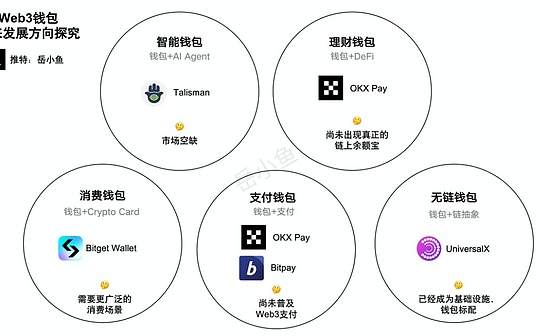 Web3钱包未来5个重点发展方向
岳小鱼
 x402协议:机器经济时代的支付革命与合规挑战
刘红林律师

 L1代币为何持续跑输BTC
金色财经
 Web3收入 要在国内纳税吗?
FinTax

 迪拜区块链周重头戏 CZ与Schiff激辩 比特币vs黄金哪家强?
C Labs 加密观察
- 寻求报道
- 金色财经APPiOS & Android
- 加入社群
Telegram - 意见反馈
- 返回顶部
- 返回底部